
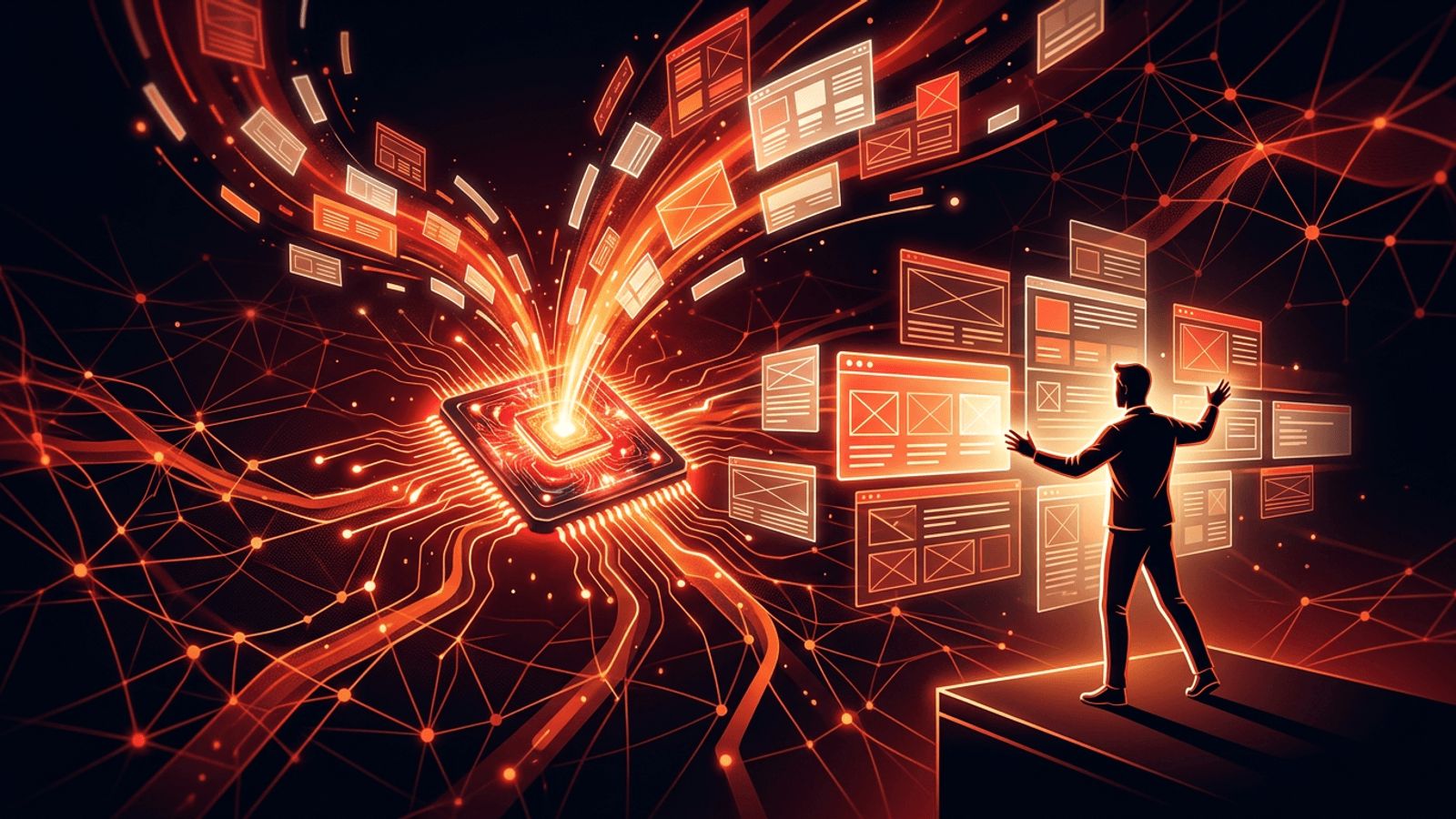
The rapid rise of artificial intelligence has transformed many industries, and web development is no exception. AI website builders can generate pages from a short description, coding agents can write and refactor large chunks of code, and design tools can produce layouts in seconds. These advances have led many business owners, students, and professionals to ask a big question: can web development be replaced by AI? While AI is automating many parts of the process, web development as a discipline is not disappearing. Instead, it is being reshaped. In this article, we will examine how AI is changing the industry, what still requires human expertise, how businesses should approach AI-built websites, and where web development is likely heading.
AAMAX.CO: Strategic Web Development in the Age of AI
As AI tools become more common, businesses need partners who can separate hype from real value and build websites that actually perform. AAMAX.CO is a full-service digital marketing company offering web development, digital marketing, and SEO services worldwide. They combine modern technology with strategic thinking to create websites that rank, convert, and scale. Organizations that need more than a generic AI-generated template can rely on their web application development services to deliver custom, secure, and future-ready digital solutions.
How AI Is Changing Web Development
AI has accelerated nearly every stage of the web development lifecycle. During planning, AI tools help draft requirements, suggest site structures, and generate content outlines. In design, AI can create wireframes, suggest color palettes, and produce visual mockups. During development, coding assistants and agents generate components, write tests, fix bugs, and explain complex code. In maintenance, AI helps monitor performance, detect errors, and suggest optimizations.
AI website builders have also made it easier for individuals and small businesses to create basic websites without technical knowledge. For a simple portfolio or a single landing page, these tools can deliver acceptable results quickly and cheaply.
Why Web Development Cannot Be Fully Replaced
Web development is about much more than writing code. It is about solving business problems through digital experiences. Understanding a company's goals, audience, competitors, brand, and operational constraints requires human insight and conversation. AI can respond to instructions, but it cannot independently determine which instructions matter most for a business's success.
Custom functionality remains a major challenge for AI. Integrating with legacy systems, building complex business workflows, handling unusual edge cases, and designing scalable architecture require deep technical expertise and accountability. AI-generated solutions often need significant human review and refinement to meet production standards.
Quality assurance is another area where humans are essential. AI can produce code that looks correct but contains security vulnerabilities, accessibility failures, performance bottlenecks, or SEO problems. Professionals are needed to test, validate, and maintain websites over time.
Finally, the web is constantly evolving. New browser features, frameworks, regulations, and user expectations emerge regularly. Human developers adapt strategies to these changes, while AI tools depend on the patterns they have learned.
The Risks of Relying Solely on AI-Built Websites
Businesses tempted to rely entirely on AI-generated websites should be aware of several risks. Generic designs can make it difficult to stand out from competitors using the same tools. Poorly structured content and technical SEO issues can limit search visibility. Security gaps may expose sensitive data. Limited customization can restrict growth as business needs evolve. And without a knowledgeable developer, fixing problems or adding new features can become costly and frustrating.
What Businesses Still Need Humans For
Strategy is the first area. Businesses need professionals who can define goals, plan user journeys, and align websites with marketing and sales objectives. Custom design that reflects a unique brand identity also benefits greatly from human creativity and judgment.
Complex development, including e-commerce systems, membership platforms, booking systems, dashboards, and integrations, requires skilled developers. SEO and performance optimization, accessibility compliance, and ongoing maintenance all demand expertise that goes beyond automated generation.
Perhaps most importantly, businesses need someone accountable. When something breaks or needs to change urgently, a reliable team that understands the system is invaluable.
How the Web Development Industry Is Adapting
Rather than being replaced, the industry is evolving. Development teams are using AI to speed up routine tasks, reduce costs, and deliver projects faster. This allows professionals to focus on higher-value work like strategy, user experience, architecture, and optimization.
New services are also emerging. Businesses increasingly want AI-powered features on their websites, such as chatbots, personalized recommendations, intelligent search, and automated workflows. Web developers who can build and integrate these features are in growing demand.
Agencies are evolving into strategic partners, combining development, design, content, SEO, and marketing to deliver measurable business outcomes rather than just websites.
The Future of Web Development
In the coming years, AI will likely handle a larger share of repetitive coding and design tasks. Simple websites may become largely automated. However, the demand for sophisticated, high-performing, secure, and personalized digital experiences will continue to grow. The role of web professionals will shift toward guiding AI, ensuring quality, solving complex problems, and creating experiences that truly connect with users.
Those who embrace AI as a tool, rather than viewing it as a threat, will be best positioned for success. Businesses that combine AI efficiency with human expertise will build websites that outperform those created by either alone.
Conclusion
Web development cannot be fully replaced by AI, but it is being transformed by it. AI automates routine tasks and lowers barriers to creating simple websites, yet strategy, creativity, custom development, quality assurance, and accountability remain firmly human responsibilities. For businesses and professionals alike, the future belongs to those who harness AI intelligently while continuing to value the expertise that turns websites into powerful business assets.