
Web design is a creative and rewarding field that blends visual art, psychology, and technology. If you have ever looked at a website and thought you could make it more beautiful or easier to use, you already have the mindset of a web designer. The good news is that you do not need a formal degree to get started. With the right learning path, consistent practice, and a willingness to study great design, you can build real skills and even turn them into a career. This guide explains exactly how to start web designing, from foundational principles to building your first portfolio.
How AAMAX.CO Supports Businesses With Expert Web Design
While learning web design is a fantastic personal goal, many businesses need professional results right away. AAMAX.CO is a full service digital marketing company offering web development, digital marketing, and SEO services worldwide. Their designers create modern, conversion-focused interfaces that align with each client's brand and audience. Whether a company needs a fresh look, a full redesign, or a design system that scales, they deliver polished layouts backed by research and usability testing. For aspiring designers, studying the work of established agencies like them is also a great way to understand what professional-grade design looks like in practice.
Understand What Web Design Really Is
Web design focuses on how a website looks, feels, and functions from the user's perspective. It includes layout, color, typography, imagery, navigation, and interaction patterns. It is different from web development, which focuses on writing the code that makes a site work, although the two overlap. Many web designers specialize in user interface (UI) design, which deals with visual elements, or user experience (UX) design, which deals with how intuitive and satisfying a website is to use. Understanding these distinctions helps you choose where to focus first.
Learn the Core Principles of Design
Great web design is built on timeless principles. Start by studying hierarchy, which guides the eye to the most important information first. Learn about contrast, alignment, repetition, and proximity, which help create order and clarity. Explore whitespace, which gives content room to breathe and improves readability. Study color theory to understand how colors evoke emotions and work together. Finally, learn typography basics such as font pairing, line height, and readable font sizes. These fundamentals will improve every design you create.
Get Familiar With Essential Design Tools
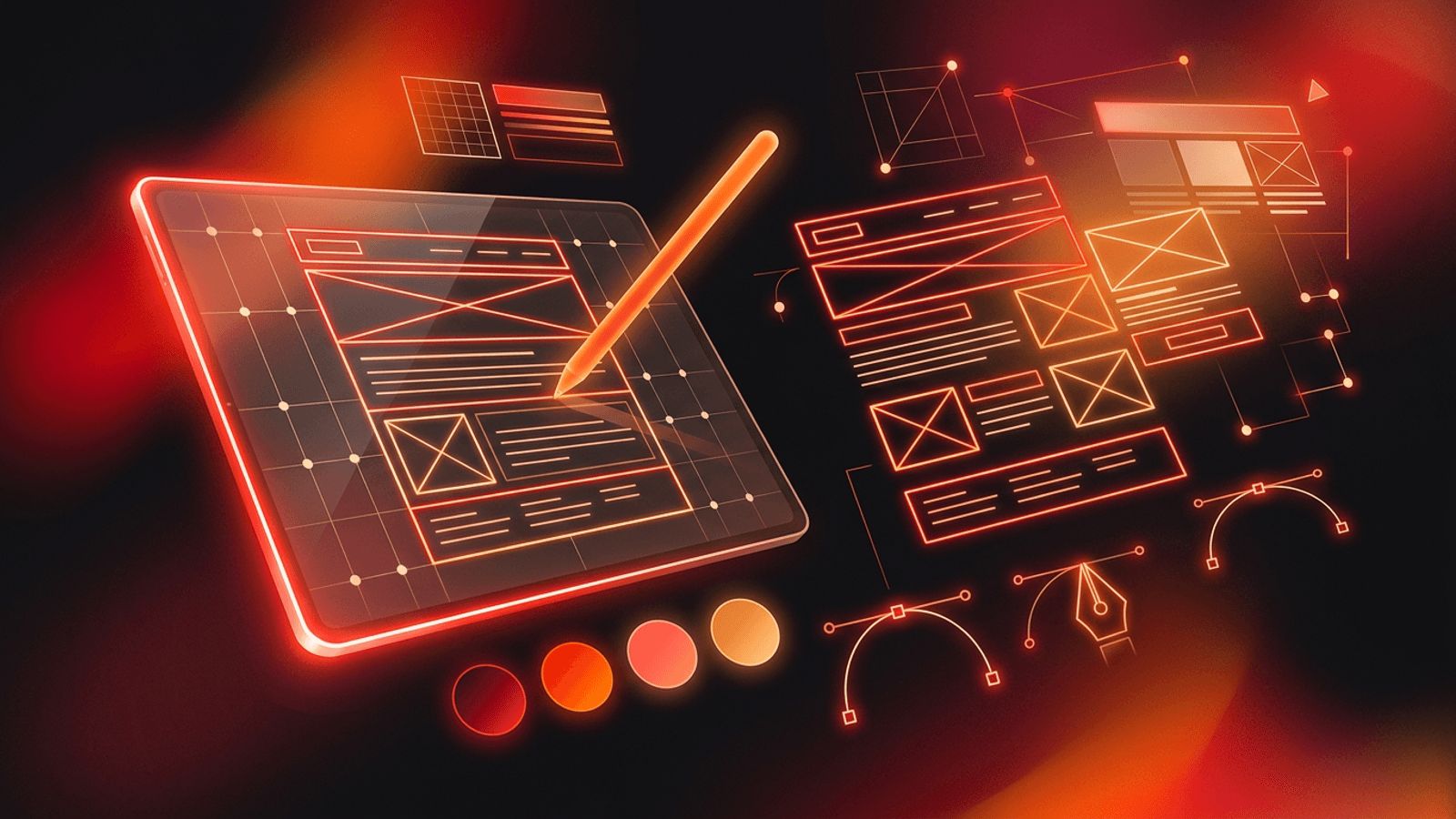
Modern web designers rely on digital tools to create wireframes, mockups, and prototypes. Figma is currently the most popular choice because it is browser based, collaborative, and free to start. Other tools like Adobe XD, Sketch, and Penpot are also widely used. Learn how to create frames, use grids, build reusable components, and prototype interactions. You should also become comfortable with an image editor for preparing photos and graphics. Mastering one primary design tool deeply is more valuable than knowing many tools superficially.
Learn Basic HTML and CSS
Even if you do not plan to become a developer, learning basic HTML and CSS will make you a much stronger designer. HTML defines the structure of a web page, while CSS controls its appearance. Understanding how layouts are built with Flexbox and Grid, how responsive breakpoints work, and what is realistic to implement helps you design pages that developers can build efficiently. It also opens the door to creating simple websites on your own, which is a great way to bring your designs to life. When projects grow beyond your skills, professional website development can turn your designs into fully functional sites.
Study User Experience and Accessibility
A beautiful website that is confusing to use will fail. Learn UX fundamentals such as user research, personas, user flows, and usability testing. Understand common navigation patterns and why users expect certain elements in specific places. Equally important is accessibility: designing websites that people with disabilities can use. This includes sufficient color contrast, readable text sizes, keyboard navigation, and meaningful alt text for images. Accessible design is not only ethical but also improves usability and search performance for everyone.
Practice by Redesigning Existing Websites
One of the fastest ways to improve is to practice on real examples. Choose a local business website, a nonprofit page, or even a popular app, and redesign it. Identify problems with the current version, then create a better layout that solves them. Document your reasoning, because explaining design decisions is a key professional skill. You can also take part in design challenges that provide prompts, such as designing a weather app or a checkout page, to sharpen your creativity and speed.
Seek Inspiration and Feedback
Surround yourself with great design. Browse curated galleries, follow respected designers, and analyze award-winning websites to understand what makes them effective. At the same time, share your work in design communities and ask for honest feedback. Constructive criticism helps you spot blind spots and grow faster. Over time, you will develop your own style while still following proven usability standards.
Build a Portfolio That Shows Your Process
Your portfolio is your most important asset as a web designer. Include three to six strong projects rather than many weak ones. For each project, show the problem, your research, wireframes, iterations, and the final design. Explain the results or improvements your design achieved. Host your portfolio on your own website to demonstrate your skills. A thoughtful portfolio that reveals how you think is often more impressive to clients and employers than flashy visuals alone.
Gain Real-World Experience
Once you have a portfolio, look for opportunities to work on real projects. Offer to design for local businesses, friends, or nonprofits. Explore freelance platforms, internships, or junior design roles. Collaborating with developers and clients teaches you how to handle feedback, manage deadlines, and communicate clearly. These soft skills are just as important as technical design ability when building a long-term career.
Conclusion
Starting web design requires curiosity, practice, and a commitment to learning. Begin with design principles, master a tool like Figma, learn basic HTML and CSS, and study UX and accessibility. Practice by redesigning real websites, seek feedback, and build a portfolio that showcases your process. As you grow, you will find your niche and your voice. And for businesses that need professional results immediately, partnering with an experienced team like AAMAX.CO ensures a website that is both beautiful and effective.