
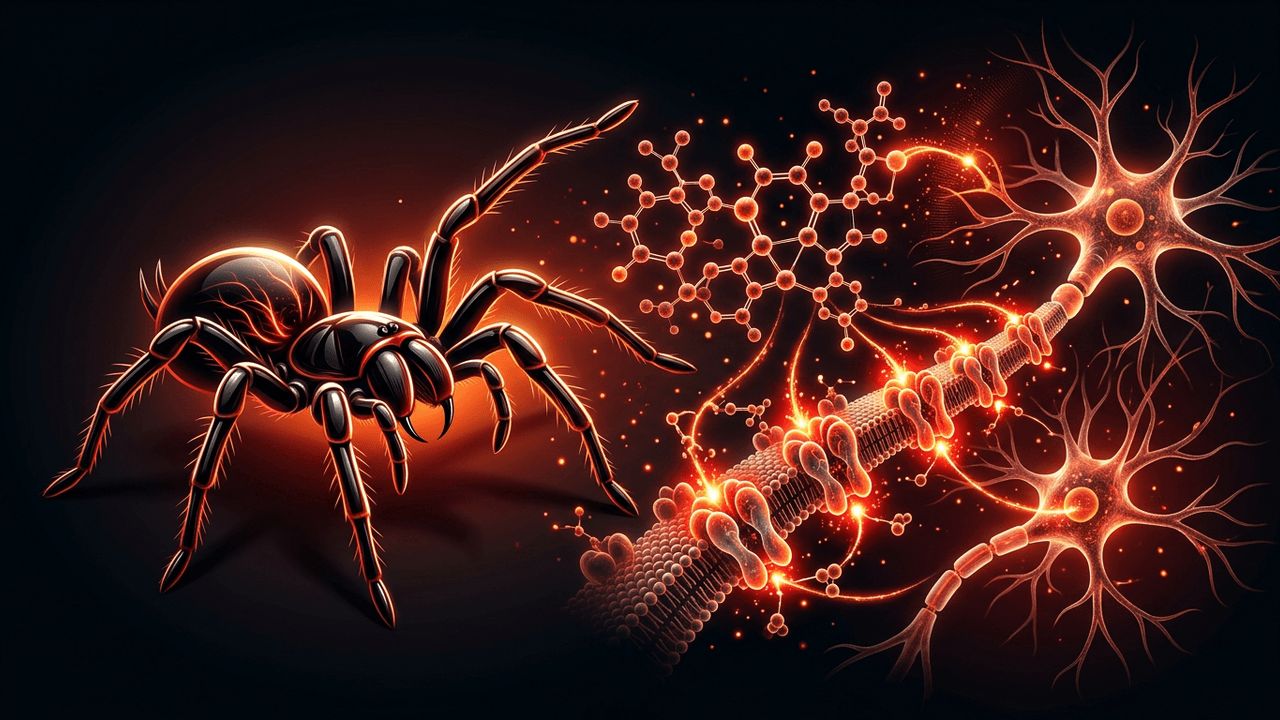
Few creatures inspire as much respect as the Australian funnel-web spider. Found primarily along the east coast of Australia, including the Sydney region, these glossy, dark spiders carry venom that ranks among the most dangerous to humans of any spider in the world. Yet thanks to scientific research and an effective antivenom, no deaths have been recorded since its introduction. Understanding how funnel-web venom works reveals a fascinating story of biochemistry, evolution, and modern medicine.
Sharing Science Online With Help From AAMAX.CO
Accurate, accessible information about topics like venomous wildlife can save lives, and it depends on well-built websites that present complex science clearly. AAMAX.CO is a full service digital marketing company providing web development, digital marketing, and SEO services worldwide. They help museums, research institutions, educators, wildlife organizations, and health publishers build fast, engaging, and search-friendly websites. Through thoughtful design, structured content, and strong SEO, they ensure important educational material reaches the people who need it most.
Meet the Funnel-Web Spider
Funnel-web spiders belong to the family Atracidae, with dozens of species found in Australia. The best-known is the Sydney funnel-web spider (Atrax robustus). They are named for the funnel- or tube-shaped silk burrows they build in moist, sheltered places such as under rocks, logs, and garden debris. Males are particularly dangerous because they wander in search of mates during warm, humid months, sometimes entering homes, swimming pools, and shoes. Notably, the venom of male Sydney funnel-webs is considered significantly more toxic to humans than that of females.
The Key Ingredient: Delta-Hexatoxins
Funnel-web venom is a complex cocktail of proteins, peptides, and other compounds, but its most dangerous components are a group of small peptides called delta-hexatoxins. The most studied example is delta-atracotoxin, originally isolated from the Sydney funnel-web. These toxins are responsible for the severe symptoms seen in humans.
How the Venom Attacks Nerve Cells
To understand the venom's action, it helps to know how nerves communicate. Nerve cells transmit signals using electrical impulses called action potentials. These impulses depend on tiny gates in the cell membrane called voltage-gated sodium channels. When a nerve fires, these channels open briefly to let sodium ions rush in, then quickly close to reset the cell for the next signal.
Delta-hexatoxins bind to these sodium channels and slow down their ability to close, a process known as inactivation. As a result, the channels stay open longer than they should, and nerves fire repeatedly and uncontrollably. Instead of a single, clean signal, the nervous system becomes flooded with continuous activity. This overstimulation affects both the somatic nervous system, which controls muscles, and the autonomic nervous system, which regulates involuntary functions such as heart rate, blood pressure, sweating, and salivation.
Why Humans Are Especially Vulnerable
One of the most intriguing facts about funnel-web venom is how selectively dangerous it is. Many mammals, such as dogs, cats, rabbits, and mice, are relatively resistant, partly because their blood contains components that can neutralize the toxin. Primates, including humans, lack this protection, making them highly susceptible. Scientists believe the venom evolved primarily to deter predators and capture insects, with its potency against primates being an evolutionary coincidence rather than a targeted adaptation.
Symptoms of Envenomation
A funnel-web bite is often painful due to the spider's large fangs and the acidity of the venom. Not every bite delivers a dangerous dose, but severe envenomation can progress in stages:
- Early local and general signs: Pain at the bite site, tingling around the mouth, tongue twitching, and muscle twitching.
- Autonomic storm: Profuse sweating, heavy salivation, tears, goosebumps, nausea, vomiting, and abdominal pain.
- Cardiovascular effects: Rapid heart rate and high blood pressure, sometimes followed by dangerously low blood pressure.
- Respiratory complications: Fluid accumulation in the lungs, known as pulmonary edema, causing breathing difficulty.
- Neurological effects: Confusion, agitation, and in severe cases, reduced consciousness or coma.
Because symptoms can develop quickly, any suspected funnel-web bite is treated as a medical emergency.
First Aid: The Pressure Immobilization Technique
Australian health authorities recommend pressure immobilization for suspected funnel-web bites. A broad elastic or crepe bandage is applied firmly over the bite site and then along the entire limb, and the limb is immobilized with a splint. The person should stay as still as possible while emergency services are called. This technique slows the movement of venom through the lymphatic system, buying valuable time to reach a hospital.
How Antivenom Works
Funnel-web antivenom was developed in Australia and introduced in 1981. It is produced by repeatedly exposing rabbits to small, safe amounts of venom, prompting their immune systems to create antibodies. These antibodies are then purified. When administered to a patient, the antibodies bind to the venom toxins, neutralizing them so they can no longer keep sodium channels open. Since its introduction, no deaths from funnel-web bites have been recorded when antivenom has been given promptly. Venom for antivenom production is collected through community spider donation programs coordinated by organizations such as the Australian Reptile Park.
Medical Promise Hidden in the Venom
Remarkably, funnel-web venom may also help save lives in other ways. Researchers have studied a peptide from the venom of a related species, the Fraser Island funnel-web, called Hi1a, which shows promise in protecting brain and heart cells from damage during strokes and heart attacks. Other venom components are being explored as eco-friendly insecticides because they target insect nervous systems. This research highlights how studying dangerous animals can lead to valuable scientific breakthroughs.
Prevention Tips
- Wear gloves and sturdy shoes when gardening or moving debris.
- Shake out shoes, clothing, and towels left outdoors.
- Check swimming pools carefully, as spiders can survive submerged for hours.
- Seal gaps under doors and around windows during warm, humid seasons.
- Never handle a funnel-web spider; contact a professional for removal.
Conclusion
Funnel-web venom works by targeting voltage-gated sodium channels in nerve cells, preventing them from closing properly and triggering a flood of uncontrolled nerve signals throughout the body. This explains the dramatic muscular, autonomic, cardiovascular, and respiratory symptoms seen in severe bites, particularly in primates like humans. Fortunately, rapid first aid and a highly effective antivenom have transformed a once-deadly encounter into a treatable emergency, and ongoing research continues to uncover the venom's surprising potential to benefit medicine.