
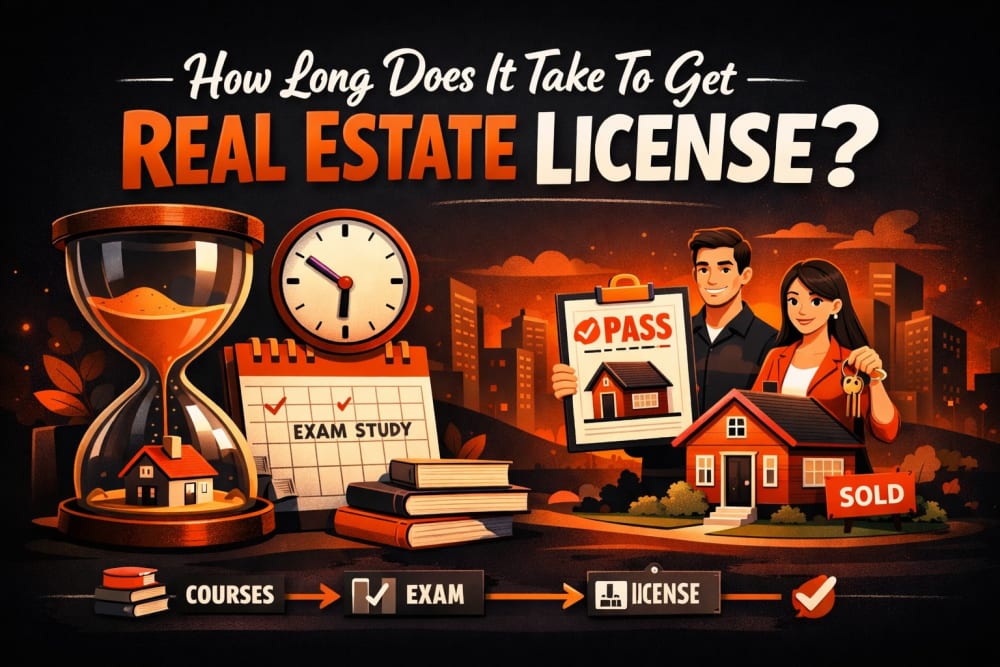
One of the first questions aspiring real estate agents ask is simple but important: how long does it take to get a real estate license? The answer depends on several factors, including your state’s licensing requirements, how quickly you complete your coursework, how long it takes to pass the exam, and how efficiently you handle the application process. For some people, the journey can take just a few months. For others, it may stretch closer to a year.
This comprehensive guide breaks down every stage of the licensing process so you can understand not only the typical timeline, but also what influences it and how you can potentially speed things up. Whether you’re considering real estate as a side hustle or a full-time career, knowing what to expect will help you plan with confidence.
Understanding the Real Estate Licensing Process
Before diving into timelines, it’s helpful to understand what getting a real estate license actually involves. In the United States, real estate is regulated at the state level, which means each state sets its own rules, education hours, and licensing procedures. While the details differ, the overall process is fairly consistent nationwide.
Most states require aspiring agents to complete pre-licensing education, pass a state-administered exam, submit a license application, undergo a background check, and affiliate with a licensed real estate broker. Each of these steps takes time, and the total duration is the sum of all these moving parts.
Average Timeline to Get a Real Estate License
On average, it takes about three to six months to get a real estate license from start to finish. This estimate assumes that you complete your coursework efficiently, pass the exam within one or two attempts, and submit your application promptly.
However, this is only an average. In states with lower education hour requirements, motivated candidates may finish in as little as eight to ten weeks. In states with more rigorous requirements or slower processing times, it can take six months or longer.
Pre-Licensing Education Requirements and Time Commitment
Pre-licensing education is often the most time-consuming part of becoming a real estate agent. Each state mandates a specific number of instructional hours that must be completed before you are eligible to sit for the licensing exam.
For example, some states require as few as 40 hours of coursework, while others require over 180 hours. These hours can typically be completed through in-person classes, online courses, or a hybrid of both.
If you study full time and take an accelerated online course, you might complete your education in a few weeks. If you are working a full-time job and studying part time, it could take several months. The flexibility of online education has made it easier than ever for students to move at their own pace, but self-discipline plays a major role in how quickly you finish.
Online vs In-Person Real Estate Classes
The format you choose for your real estate education can significantly affect how long it takes to get licensed. Online courses generally allow you to move faster because you can study whenever it fits your schedule. Many motivated learners complete online coursework much faster than traditional classroom programs.
In-person classes, on the other hand, follow a fixed schedule. While they can provide structure and direct access to instructors, they may take longer to complete because you are limited by class meeting times and duration.
Neither option is inherently better in terms of quality, but if speed is your priority, online education is often the faster route.
How Long Does It Take to Prepare for the Real Estate Exam?
Once you complete your pre-licensing education, the next step is preparing for the real estate exam. Preparation time varies widely depending on your study habits, background knowledge, and confidence with standardized tests.
Some candidates feel ready to test immediately after finishing their coursework, while others spend several weeks reviewing exam prep materials, taking practice tests, and reinforcing key concepts. On average, exam preparation takes anywhere from one to four weeks.
Those who dedicate consistent daily study time and use high-quality exam prep tools tend to move faster and pass on their first attempt, which can significantly shorten the overall licensing timeline.
Scheduling and Taking the Real Estate Licensing Exam
Scheduling the exam can be quick or slow depending on availability in your area. In many states, exams are offered frequently at testing centers or online through proctored systems. In these cases, you may be able to schedule an exam within days of becoming eligible.
In other states or during peak periods, such as spring and summer, you might have to wait several weeks for an available testing slot. This waiting period can add unexpected time to your licensing journey.
The exam itself typically takes two to four hours and consists of both national and state-specific sections. Passing scores vary by state.
What If You Don’t Pass the Exam on the First Try?
Not everyone passes the real estate exam on the first attempt, and that’s okay. If you fail, most states allow you to retake the exam after a short waiting period, often ranging from 24 hours to a few weeks.
Each retake adds time to the overall process, especially if you need additional study time before trying again. Candidates who pass on the first try often shave weeks or even months off their licensing timeline.
Application Processing and Background Checks
After passing the exam, you must submit a formal license application to your state’s real estate regulatory agency. This step often includes fingerprinting, a criminal background check, and payment of licensing fees.
Application processing times vary by state. Some states issue licenses within a few days, while others may take several weeks to review applications and finalize approvals. Delays are more common if there are errors in your paperwork or issues that require additional review.
On average, application processing takes two to six weeks, though it can be faster or slower depending on the state and time of year.
Broker Sponsorship and Activation of Your License
In most states, new real estate agents must be sponsored by a licensed broker before their license becomes active. Finding a broker can happen at any point during the licensing process, but many candidates wait until after passing the exam.
The time it takes to choose a broker depends on how proactive you are. Some people secure a broker in a matter of days, while others take weeks to interview multiple brokerages and compare commission splits, training programs, and company culture.
Your license is typically not active until a broker submits the necessary sponsorship paperwork, so this step is an important part of the overall timeline.
State-by-State Differences in Licensing Timelines
One of the biggest variables in how long it takes to get a real estate license is your state. States with higher education requirements naturally take longer, while states with streamlined processes may move faster.
For example, a state with a 60-hour education requirement and fast application processing might allow you to get licensed in two to three months. A state requiring over 150 hours of education and extensive background checks may take six months or more.
Because of these differences, it’s essential to check your specific state’s requirements when estimating your timeline.
Can You Get a Real Estate License Faster?
Yes, it is possible to speed up the process if you are motivated and organized. Choosing an accelerated online course, studying consistently, scheduling your exam as soon as possible, and submitting accurate application materials can significantly reduce delays.
Many candidates who treat the process like a full-time project are able to complete everything in under three months. However, rushing without proper preparation can backfire if it leads to exam failure or application errors.
Balancing Speed and Readiness
While it’s tempting to focus solely on how fast you can get licensed, it’s important to balance speed with readiness. Real estate is a complex profession involving contracts, legal responsibilities, and significant financial transactions.
Taking the time to truly understand the material can set you up for long-term success, not just passing the exam. A slightly longer licensing timeline is often worth it if it results in greater confidence and competence when you start working with clients.
What Happens After You Get Licensed?
Getting your real estate license is just the beginning. Once licensed, you’ll typically need to complete post-licensing education within a certain timeframe, usually during your first year. You’ll also spend time learning your brokerage’s systems, building your client base, and developing your skills.
While these steps don’t affect how long it takes to get licensed, they are important to consider when planning your overall career transition into real estate.
Is Getting a Real Estate License Worth the Time?
For many people, the time investment required to get a real estate license is well worth it. Real estate offers flexible schedules, unlimited income potential, and the opportunity to build a business around helping people make important life decisions.
Understanding the timeline upfront helps set realistic expectations and reduces frustration along the way. With the right mindset and preparation, the process can be smooth, manageable, and even enjoyable.
Final Thoughts on How Long It Takes to Get a Real Estate License
So, how long does it take to get a real estate license? For most people, the answer falls somewhere between three and six months, though it can be shorter or longer depending on individual circumstances and state requirements.
The key factors include pre-licensing education hours, study pace, exam success, application processing times, and broker selection. By understanding each stage and planning accordingly, you can navigate the process efficiently and start your real estate career with clarity and confidence.