
While web design often refers to an entire website, web page design focuses on crafting individual pages that achieve specific goals. A home page introduces a brand, a landing page drives conversions, a product page encourages purchases, and a contact page facilitates communication. Each page requires thoughtful layout, content hierarchy, and visual design. This guide explains how to do web page design effectively, covering page goals, layout structures, visual hierarchy, key components, responsive design, and optimization.
Designing High-Converting Pages with AAMAX.CO
Every page on a website has a job to do, and great page design ensures it does that job well. AAMAX.CO is a full-service digital marketing company offering web development, digital marketing, and SEO services worldwide. They design and build web pages focused on clarity, engagement, and conversions, combining user experience expertise with SEO best practices. Businesses looking for landing pages, product pages, or complete websites that perform can rely on their team to deliver measurable results.
Start with the Page's Purpose
Every web page should have one primary purpose. Ask what the visitor wants to accomplish and what you want them to do. A landing page might aim for form submissions, a pricing page for plan selection, and a blog post for engagement and subscriptions. Defining the purpose guides every design decision on the page.
Understand the Visitor's Journey
Consider how visitors arrive at the page and what they already know. Visitors from search engines may need quick answers, while those from an email campaign may already be familiar with your offer. Design the page to meet visitors where they are and guide them logically toward the desired action.
Plan the Page Structure
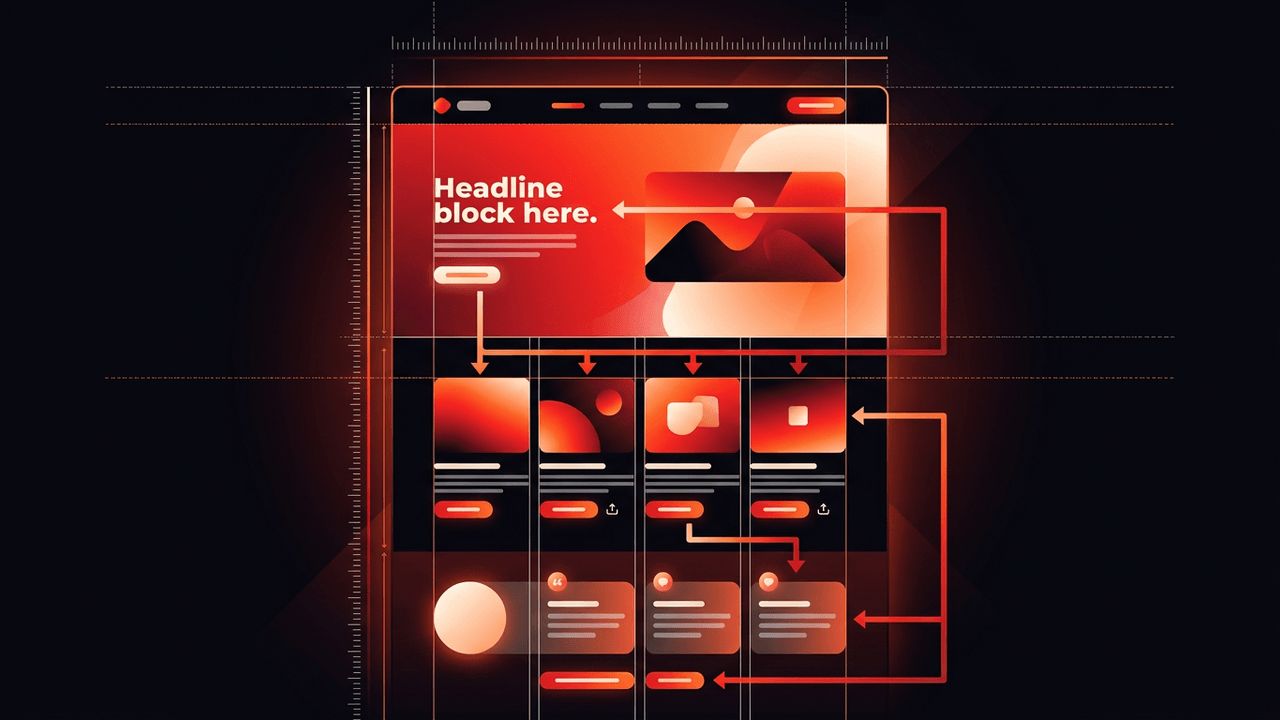
Most effective web pages follow a clear structure. The header contains the logo and navigation. The hero section, located at the top, presents a compelling headline, supporting text, and a primary call to action. Following sections provide supporting information, such as benefits, features, social proof, and details. A final call to action and footer complete the page. This structure guides visitors from attention to action.
Create a Strong Hero Section
The hero section is the most important area of a web page because it determines whether visitors continue scrolling. Use a clear, benefit-driven headline, a concise subheadline, a relevant image or illustration, and a prominent call-to-action button. Avoid clutter and make sure the message is understood within seconds.
Establish Visual Hierarchy
Visual hierarchy guides the eye to the most important elements first. Use size, color, contrast, and spacing to emphasize key information. Headlines should be larger and bolder than body text, and primary buttons should stand out from secondary ones. A clear hierarchy makes pages easy to scan and understand.
Use Grids and Alignment
Grid systems create structure and consistency. Align text, images, and components to a grid to achieve a clean, organized appearance. Consistent margins and spacing between sections improve readability and give the page a professional look.
Choose Typography Carefully
Typography affects readability and personality. Select legible fonts with appropriate sizes, line heights, and line lengths. Use a limited number of font styles and weights to maintain consistency. Body text should be comfortable to read on both desktop and mobile screens.
Apply Color Strategically
Color draws attention, evokes emotion, and reinforces branding. Use your brand palette consistently and reserve accent colors for important elements like calls to action. Ensure sufficient contrast between text and backgrounds for accessibility.
Incorporate Meaningful Visuals
Images, icons, illustrations, and videos enhance understanding and engagement. Choose visuals that support your message rather than decorate the page. Product photos, team images, diagrams, and short demo videos can communicate value quickly. Optimize all visuals for fast loading.
Add Social Proof and Trust Signals
Testimonials, reviews, client logos, case studies, certifications, and statistics build credibility. Place trust signals near calls to action to reassure visitors when they are deciding. Authentic social proof often has a significant impact on conversion rates.
Design Effective Calls to Action
Calls to action should be visually distinct, clearly worded, and placed strategically throughout the page. Use action-oriented text such as "Get Started," "Request a Quote," or "Download Now." Repeat the primary call to action at logical points, especially after key sections.
Design Responsively
Web pages must adapt to different screen sizes. Design mobile versions first, stacking content vertically and prioritizing essential information. Ensure buttons are easy to tap, images resize appropriately, and navigation remains accessible. Test designs across multiple devices.
Optimize for Speed and SEO
Page design impacts performance and search visibility. Use optimized images, minimal scripts, and efficient layouts to ensure fast loading. Structure content with proper headings, include relevant keywords, and write descriptive meta titles and descriptions. Well-designed pages built with clean code and professional website development practices perform better in search results.
Test and Refine
After launch, analyze page performance using analytics and heatmaps. Identify where visitors drop off or hesitate. Run A/B tests on headlines, images, and calls to action to discover what resonates best. Continuous optimization improves results over time.
The Value of Professional Page Design
Well-designed pages directly influence leads, sales, and brand perception. Partnering with specialists in website design ensures each page is strategically crafted to engage visitors and achieve its purpose.
Conclusion
Doing web page design requires a clear purpose, an understanding of the visitor journey, a logical structure, strong visual hierarchy, thoughtful typography and color, meaningful visuals, and persuasive calls to action. By designing responsively, optimizing for speed and SEO, and continuously testing, you can create web pages that look great and deliver measurable results.