
Scaling web applications is about more than adding servers. True scalability touches architecture, infrastructure, processes, and people. An application that handles traffic spikes gracefully but takes weeks to ship a simple feature is not truly scalable, and neither is one that runs efficiently but costs a fortune at every new milestone. This guide presents a strategic framework for scaling web applications holistically, helping you choose the right patterns for your stage of growth and avoid over-engineering.
Build Scalable Platforms With AAMAX.CO
Choosing the right scaling strategy can make or break a growing digital product. AAMAX.CO is a full service digital marketing company that delivers web development, digital marketing, and SEO services worldwide. They help organizations select appropriate architectures, migrate to cloud-native infrastructure, and optimize applications for speed and cost. Whether you are launching a new platform or rescuing one that is buckling under demand, their web application development team brings the experience to scale it the right way.
Defining Scalability
Scalability is the ability of a system to handle increased load by adding resources, ideally in proportion to the load. There are several dimensions to consider:
- Load scalability: handling more requests and users.
- Data scalability: handling growing volumes of stored information.
- Geographic scalability: serving users across regions with low latency.
- Organizational scalability: allowing more developers to work productively on the same product.
- Cost scalability: keeping infrastructure spending proportional to revenue.
The Scale Cube: Three Axes of Scaling
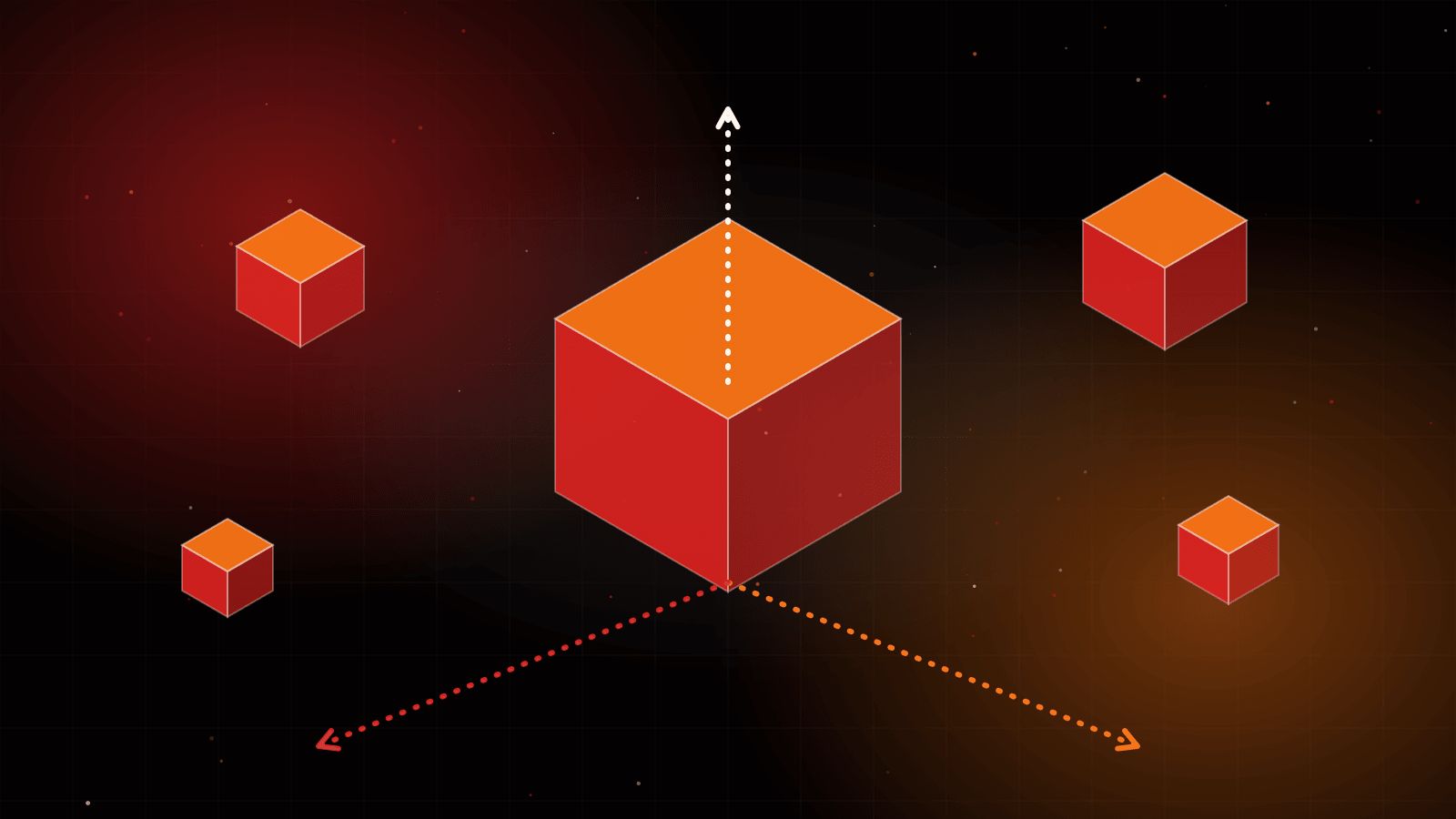
A popular mental model, known as the scale cube, describes three ways to scale an application:
- X-axis: cloning. Run identical copies of the application behind a load balancer. This is the simplest form of horizontal scaling and works well for stateless applications.
- Y-axis: functional decomposition. Split the application by function, such as separating billing, search, and user management into distinct services.
- Z-axis: data partitioning. Run identical code, but have each instance responsible for a subset of data, such as a group of customers or a geographic region.
Most mature systems combine all three. The art lies in knowing which axis addresses your current bottleneck.
Modular Monolith vs Microservices
Microservices are often presented as the ultimate scaling solution, but they carry significant overhead: network latency, distributed transactions, complex deployments, and demanding observability. For many teams, a modular monolith is the better starting point. It is a single deployable application with strong internal boundaries between modules, each owning its own logic and data access.
A modular monolith can scale horizontally just like microservices for most workloads, and its clear boundaries make it easy to extract individual services later when a specific module needs independent scaling or a separate team. Choose microservices when you have multiple teams that need to deploy independently, or components with radically different scaling or technology needs.
Autoscaling Strategies
Manual capacity planning cannot keep up with modern traffic patterns. Autoscaling adjusts resources automatically:
- Reactive autoscaling adds capacity when metrics such as CPU, memory, or request count cross a threshold.
- Scheduled autoscaling prepares for predictable peaks, like business hours or weekly promotions.
- Predictive autoscaling uses historical data to provision capacity before traffic arrives.
Make sure your application starts quickly, because slow startup times reduce the effectiveness of autoscaling during sudden spikes.
Serverless and Edge Computing
Serverless platforms run code in response to requests and scale from zero to thousands of concurrent executions automatically. You pay only for what you use, which makes serverless attractive for variable workloads, APIs, and background tasks. Edge computing goes further by running code in data centers close to users, reducing latency for personalization, authentication checks, and dynamic content. Many modern frameworks deploy seamlessly to serverless and edge runtimes, letting teams scale without managing servers at all.
Be mindful of limitations, including execution time limits, cold starts, and connection management with traditional databases. Serverless-friendly databases and connection poolers help address these challenges.
Data Layer Strategies
Data is usually the hardest part to scale. Apply proven techniques in order of complexity: indexing and query optimization, caching, read replicas, vertical scaling of the database, partitioning large tables, and finally sharding. Consider whether certain data belongs in a different store entirely, such as a search engine for text queries, a time-series database for metrics, or object storage for files. Choosing the right tool for each workload is often more effective than forcing one database to do everything.
Performance Budgets and Front-End Scale
Every page view consumes server resources, bandwidth, and user patience. Establish performance budgets for page weight, JavaScript size, and Core Web Vitals. Use static generation and incremental regeneration where possible, cache API responses, and offload media delivery to CDNs. A lean front end reduces infrastructure costs while improving conversions and SEO.
Managing Costs While Scaling
Cost efficiency is a form of scalability. Tag resources by team and feature to understand spending, right-size instances regularly, use committed-use discounts for baseline workloads, and shut down idle development environments. Review architectural choices through a cost lens; for example, excessive cross-region data transfer can quietly become one of your largest bills.
Scaling Your Team and Processes
As applications grow, so do the teams behind them. Invest in continuous integration and delivery pipelines, automated testing, infrastructure as code, and clear documentation. Align team boundaries with system boundaries so each team owns a well-defined area end to end. Standardized tooling and internal platforms reduce friction and allow new developers to contribute quickly.
Conclusion
Scaling web applications successfully requires a balanced strategy across architecture, infrastructure, data, cost, and people. Use the scale cube to identify the right axis, start with a modular monolith, embrace autoscaling, serverless, and edge computing where they fit, treat the data layer with care, and build processes that let your team grow alongside your product. With this framework, you can scale deliberately rather than reactively.