
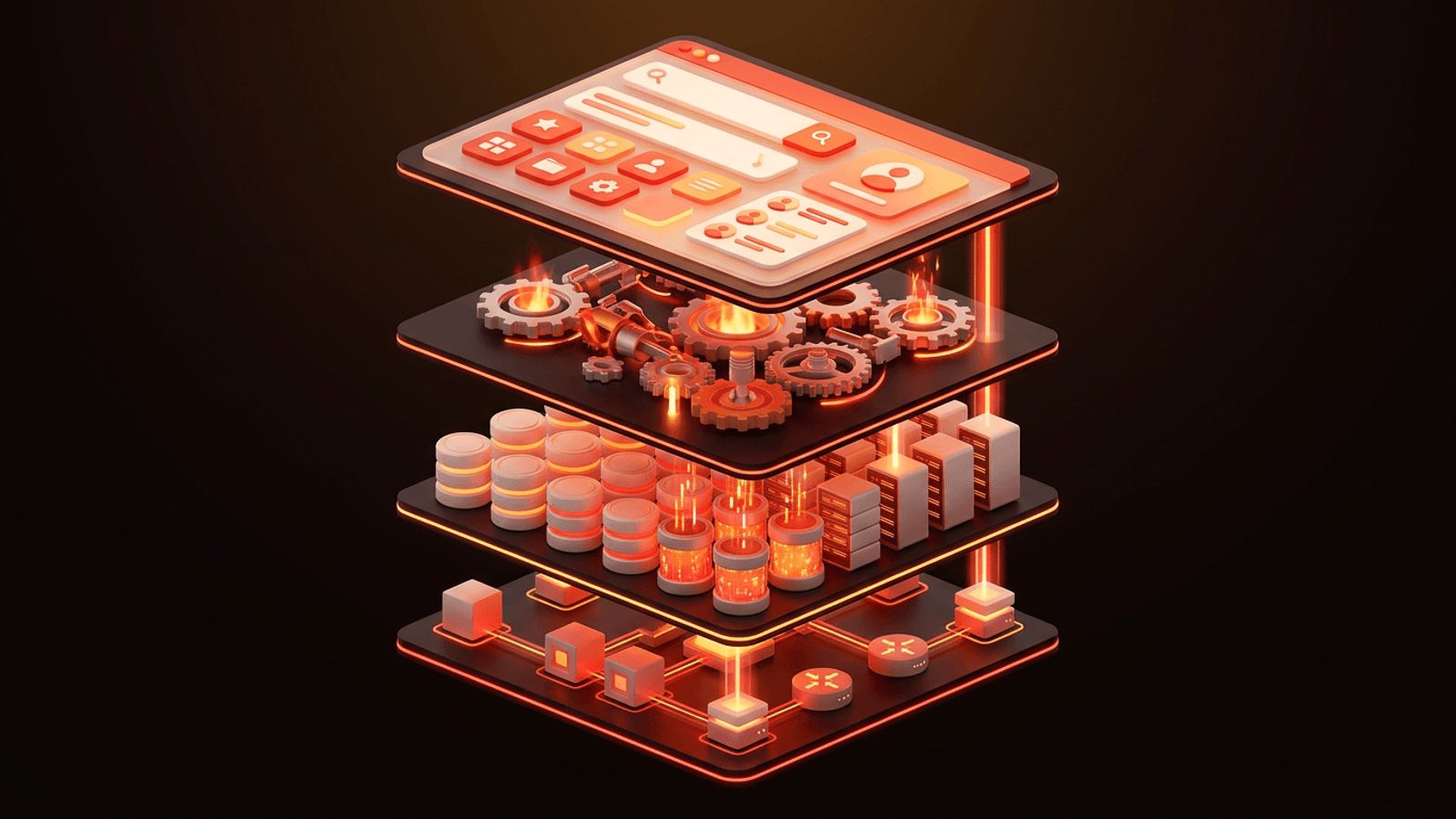
As web applications grow in complexity, organizing their code and infrastructure becomes critical. An application that starts as a simple project can quickly become difficult to maintain, scale, and secure if everything is tangled together. To solve this, software architects often use a layered approach known as n-tier architecture. An n-tier web application is an application divided into multiple logical and physical layers, or tiers, such as presentation, business logic, and data, where each tier has a specific responsibility and communicates only with adjacent tiers. The "n" represents any number of tiers, although three-tier architecture is the most common. In this article, we explain how n-tier applications work, their typical layers, benefits, challenges, and when this architecture is the right choice.
Scalable Architecture Expertise from AAMAX.CO
Designing robust application architecture requires experience and foresight. AAMAX.CO is a full-service digital marketing company offering web development, digital marketing, and SEO services worldwide. Their engineers plan and build layered applications that separate concerns cleanly, making systems easier to scale, secure, and maintain. Whether a business needs a customer portal, an internal tool, or a full SaaS platform, they design architectures that support growth while keeping user experiences fast and reliable.
What Is an N-Tier Web Application?
In software architecture, a tier refers to a distinct layer of an application that can run on its own server or environment. N-tier architecture, also known as multi-tier architecture, separates an application into these independent tiers. Each tier handles a specific set of tasks and interacts with other tiers through well-defined interfaces, such as APIs. This separation contrasts with monolithic, single-tier designs where user interface, logic, and data access are tightly coupled in one codebase and environment.
Layers vs. Tiers
The terms layers and tiers are often used interchangeably, but there is a subtle difference. Layers are logical separations within code, such as organizing classes into presentation, business, and data access modules. Tiers are physical separations, meaning each layer runs on a different machine, container, or service. An application can have multiple layers on a single tier, but a true n-tier application distributes layers across separate infrastructure.
The Common Tiers in an N-Tier Application
Presentation tier: This is the user interface that people interact with, typically a website or web app running in the browser. It displays information and collects user input. Technologies include HTML, CSS, JavaScript, and frameworks like React, Vue, or Angular.
Application or business logic tier: This middle tier processes requests, applies business rules, performs calculations, and coordinates data flow. It is often built with languages and frameworks such as Node.js, Python with Django, Java with Spring, PHP with Laravel, or .NET.
Data tier: This tier stores and manages data using databases such as PostgreSQL, MySQL, SQL Server, or MongoDB. It handles data persistence, retrieval, and integrity.
In architectures with more than three tiers, additional layers might include a caching tier using Redis, an API gateway tier, a messaging or queue tier, a search tier, or separate microservices for authentication, payments, and notifications.
How Tiers Communicate
In a well-designed n-tier application, each tier communicates only with the tiers directly adjacent to it. The presentation tier sends requests to the application tier, usually via REST or GraphQL APIs. The application tier processes those requests and queries the data tier as needed. The data tier never communicates directly with the presentation tier. This strict flow improves security, because the database is never exposed to users, and makes the system easier to reason about.
Benefits of N-Tier Architecture
- Scalability: Each tier can be scaled independently. If the application tier experiences heavy load, additional servers can be added without changing the database or front end.
- Maintainability: Separation of concerns makes code easier to understand, test, and update. Teams can modify one tier without disrupting others.
- Security: Sensitive data stays behind multiple layers, and firewalls can restrict communication between tiers.
- Flexibility: Technologies in one tier can be replaced or upgraded independently, such as switching front-end frameworks without rewriting business logic.
- Reusability: The same application and data tiers can serve multiple clients, such as a website, mobile app, and partner integrations.
- Team specialization: Front-end, back-end, and database specialists can work in parallel.
Challenges of N-Tier Architecture
N-tier architecture also introduces complexity. More tiers mean more infrastructure to manage, monitor, and secure. Network communication between tiers adds latency, which must be minimized with caching and efficient APIs. Debugging can be harder when issues span multiple tiers. Development and hosting costs may be higher than for a simple monolithic application. For small projects, the overhead may outweigh the benefits.
N-Tier vs. Microservices
Microservices architecture takes separation further by dividing the application tier into many small, independently deployable services, each responsible for a specific business capability. N-tier architecture focuses on horizontal layers, while microservices emphasize vertical slices of functionality. Many modern systems combine both, using a presentation tier, an API gateway, multiple microservices, and dedicated data stores.
When to Use an N-Tier Web Application
N-tier architecture is ideal for applications expected to grow significantly, serve many users, handle sensitive data, or support multiple client platforms. Enterprise systems, e-commerce platforms, banking portals, healthcare applications, and SaaS products commonly use this approach. Planning the architecture properly is a key part of professional web application development.
The Presentation Tier and User Experience
While the back-end tiers handle logic and data, the presentation tier shapes how users perceive the entire system. Clear interfaces, responsive layouts, and intuitive workflows are essential. Strong website design ensures that the complexity behind the scenes is invisible to users, while skilled website development keeps the front end fast, accessible, and well-integrated with the APIs it depends on.
Conclusion
An n-tier web application divides functionality into separate tiers, typically presentation, business logic, and data, each with a distinct responsibility. This structure improves scalability, maintainability, security, and flexibility, making it a proven architecture for complex and growing applications. Although it introduces additional complexity, careful planning and modern cloud tools make n-tier systems highly effective. For businesses building serious digital products, adopting a layered architecture lays a solid foundation for long-term success.