
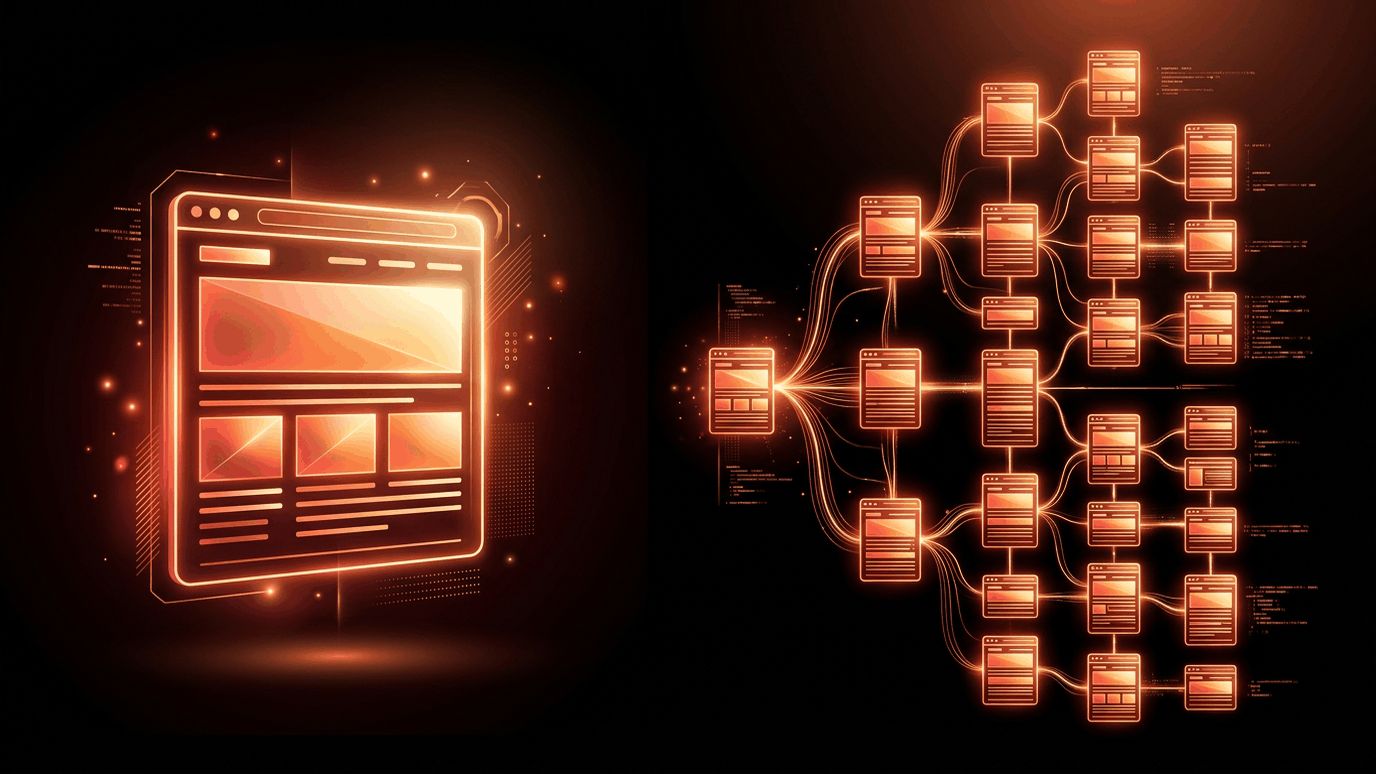
The terms "web page" and "website" are often used interchangeably in everyday conversation, but they refer to different things. Understanding the distinction is more than a matter of vocabulary. It affects how you plan content, structure navigation, approach search engine optimization, and communicate with designers and developers. This article explains the difference between a web page and a website, with clear examples and practical insights for anyone building an online presence.
AAMAX.CO: Designing Every Page and the Website That Connects Them
Great online experiences depend on individual pages that perform well and a website structure that ties them together logically. AAMAX.CO is a full service digital marketing company offering web development, digital marketing, and SEO services worldwide. They plan site architecture, design page templates, and build cohesive websites where every page has a clear purpose. Their strategic approach helps businesses guide visitors smoothly from first click to conversion while strengthening search visibility across the entire site.
What Is a Web Page?
A web page is a single document on the World Wide Web that is displayed in a browser. It has its own unique URL and contains content such as text, images, videos, links, and forms. Web pages are written in HTML, styled with CSS, and often enhanced with JavaScript for interactivity.
Examples of web pages include a blog article, a product listing, a contact form, or a company's about page. Each of these is a distinct document that can be accessed directly by entering its specific address.
What Is a Website?
A website is a collection of related web pages grouped together under a single domain name. These pages share a common design, navigation, and purpose, and they are linked to one another so visitors can move between them easily. A website is hosted on a web server and accessed through its domain, such as example.com.
For example, an online store's website might include a homepage, category pages, hundreds of product pages, a shopping cart, a checkout page, and customer support pages. Together, these individual pages form the complete website.
A Simple Analogy
Think of a website as a book and web pages as the individual pages within it. The book has a title, a cover, a table of contents, and chapters that follow a logical order. Each page contains specific information, but the pages make the most sense when read as part of the whole. Similarly, a website provides the overall context, while web pages deliver individual pieces of content.
Key Differences at a Glance
- Scope: A web page is a single document; a website is a collection of documents.
- Address: A web page has a specific URL, such as example.com/about, while a website is identified by its domain, example.com.
- Content: A web page focuses on one topic or purpose; a website covers a broader range of related topics.
- Navigation: A website includes menus and links that connect its pages; a web page is a single destination within that structure.
- Development: Creating a web page involves designing one layout; building a website requires planning architecture, templates, and consistent branding across many pages.
Can a Website Have Only One Page?
Yes. Single-page websites, often used for landing pages, event promotions, or simple portfolios, contain all their content on one long, scrollable page. Navigation links jump to different sections of the same page rather than separate documents. In this case, the website and the web page are essentially the same, though the site still has its own domain and hosting. Single page web applications are another special case, where one HTML document dynamically updates its content to simulate multiple views.
Why the Difference Matters for SEO
Search engines rank individual web pages, not entire websites. When someone searches for a specific query, the search engine returns the page that best answers it. This means each page should be optimized with a unique title, meta description, focused content, and relevant keywords. At the same time, the website as a whole influences rankings through its overall authority, internal linking structure, technical health, and reputation. Successful SEO strategies optimize both individual pages and the overall website.
Why the Difference Matters for Design
Designing a web page involves arranging content to achieve a specific goal, such as encouraging a visitor to request a quote. Designing a website requires a broader view, including navigation, consistent branding, reusable templates, and logical user journeys across pages. Thoughtful website design ensures that every page looks like part of the same family while still serving its individual purpose.
Why the Difference Matters for Development
Developers build websites using reusable components and templates so that adding new pages is efficient and consistent. A blog template, for instance, can power hundreds of articles. Developers also manage site-wide elements such as headers, footers, global styles, and performance optimizations. Professional website development creates a scalable system rather than a set of disconnected pages, making future growth straightforward.
Planning Your Website and Its Pages
Start by defining your website's overall goals and audience. Then map out the pages needed to support those goals, such as home, about, services, portfolio, blog, and contact. Create a sitemap that shows how pages connect. Assign each page a clear purpose and primary call to action. This planning process ensures both the website and its individual pages work together effectively.
Conclusion
A web page is a single document with its own URL, while a website is a collection of related pages under one domain. Understanding this difference helps you plan content, design consistent experiences, optimize for search engines, and communicate clearly with your development team. When every page is purposeful and the website connects them seamlessly, you create an online presence that is both user-friendly and effective.