
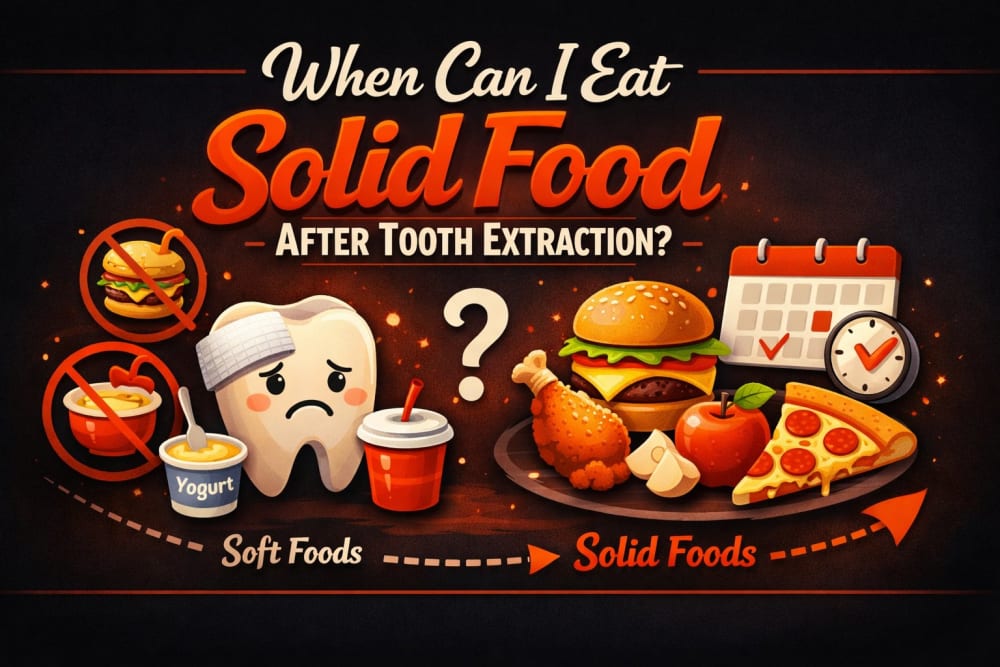
Tooth extraction is a common dental procedure, whether it’s done to remove a severely damaged tooth, address overcrowding, treat infection, or prepare for orthodontic treatment. While the procedure itself is often quick, the recovery period requires careful attention, especially when it comes to eating. One of the most frequently asked questions after a tooth extraction is: when can I eat solid food again?
The answer is not the same for everyone. It depends on the type of extraction, how your body heals, and how well you follow post-operative instructions. Eating the wrong foods too soon can interfere with healing, cause pain, or even lead to complications such as dry socket. This in-depth guide explains when you can safely return to solid foods, what to eat at each stage of recovery, and how to protect your healing extraction site.
Understanding the Healing Process After Tooth Extraction
Before discussing solid foods, it’s important to understand what happens in your mouth after a tooth is removed. Once the tooth is extracted, a blood clot forms in the socket. This clot plays a critical role in healing, as it protects the underlying bone and nerve endings and provides a foundation for new tissue growth.
Over the next several days, your body begins repairing the area by forming granulation tissue, followed by gum tissue that gradually closes over the socket. Bone remodeling continues beneath the surface for weeks or even months. Any disruption to this process, especially during the first few days, can delay healing or cause complications.
Eating solid food too soon can dislodge the blood clot, irritate the wound, or introduce food particles that increase the risk of infection. That is why dentists recommend a gradual return to normal eating rather than an immediate switch back to solid foods.
Why You Should Avoid Solid Foods Immediately After Extraction
Immediately after a tooth extraction, your mouth is sensitive, swollen, and sometimes numb from anesthesia. Chewing solid foods during this time can be uncomfortable and risky. Hard, crunchy, or chewy foods can apply pressure to the extraction site and disturb the healing blood clot.
Another concern is dry socket, a painful condition that occurs when the blood clot is dislodged or dissolves too early. Dry socket exposes the bone and nerves, leading to intense pain, bad breath, and delayed healing. Eating solid foods prematurely, especially those that require vigorous chewing, increases the likelihood of this complication.
Additionally, food particles can become trapped in the extraction site, creating an environment where bacteria can grow. This may result in infection, swelling, or prolonged discomfort. For these reasons, dentists strongly advise sticking to soft or liquid foods during the initial recovery phase.
When Can I Eat Solid Food After a Simple Tooth Extraction
A simple tooth extraction typically involves removing a visible tooth that has a single root and is not impacted. Recovery from this type of extraction is usually faster than from surgical extractions.
For most people, soft foods can be introduced within 24 hours, while solid foods may be reintroduced gradually after 2 to 3 days. However, “solid” does not mean hard or crunchy foods right away. Instead, it refers to foods that require gentle chewing and do not pose a risk to the extraction site.
By day three or four, many patients feel comfortable eating foods such as soft-cooked vegetables, tender meats cut into small pieces, or pasta. Full return to a normal diet often occurs within one week, provided there is no pain, swelling, or complications.
When Can I Eat Solid Food After Surgical or Wisdom Tooth Extraction
Surgical extractions, including impacted wisdom teeth removal, involve cutting into the gum and sometimes removing bone. Because this procedure is more invasive, healing takes longer, and dietary restrictions are more important.
After a surgical extraction, solid foods are usually avoided for at least 5 to 7 days. During this time, patients should focus on liquid and very soft foods that require minimal chewing. Attempting to eat solid foods too early can reopen stitches, increase swelling, and prolong pain.
Most dentists recommend waiting at least one week before introducing soft solids and closer to two weeks before returning to harder or chewier foods. Always follow your dentist or oral surgeon’s specific advice, as individual recovery times can vary significantly.
Stages of Eating After Tooth Extraction
First 24 Hours: Liquids and Extremely Soft Foods
The first 24 hours after extraction are critical for blood clot formation. During this period, stick to liquids and foods that do not require chewing. Examples include water, broth, smoothies eaten with a spoon, yogurt, applesauce, and mashed bananas.
Avoid using straws, as the suction can dislodge the blood clot. Also, avoid hot foods and drinks, which can increase bleeding and irritation.
Days 2 to 3: Soft Foods
After the first day, you can begin incorporating soft foods that require minimal chewing. These may include scrambled eggs, oatmeal, mashed potatoes, cottage cheese, and soft soups with no large chunks.
Chew slowly and use the opposite side of your mouth from the extraction site. Pay attention to any discomfort, as pain may be a sign that you are not ready to advance your diet.
Days 4 to 7: Transition to Soft Solids
If healing is progressing well, you can start adding soft solid foods such as pasta, rice, soft bread, flaky fish, or well-cooked vegetables. These foods should be easy to chew and swallow without causing strain on the extraction site.
Continue avoiding crunchy, sticky, or spicy foods. Maintaining good oral hygiene while being gentle around the extraction area is also important during this stage.
After One Week: Gradual Return to Solid Foods
Most people can begin returning to a normal diet after about one week, especially after a simple extraction. However, harder foods such as nuts, chips, popcorn, and raw vegetables should still be introduced cautiously.
For surgical extractions, this stage may take longer, and it is not uncommon to wait two weeks or more before resuming a completely normal diet.
Foods to Avoid While Healing
Certain foods can interfere with healing and should be avoided until your dentist confirms it is safe to eat them again. Hard and crunchy foods like chips, crackers, and nuts can scrape the extraction site or dislodge the clot.
Sticky foods such as caramel, chewing gum, or gummy candies can pull at the wound and are difficult to clean away from the socket. Spicy foods may irritate the tissue and increase discomfort, while acidic foods can cause stinging sensations.
Seeds and small grains, including sesame seeds or quinoa, can easily become lodged in the extraction site and increase the risk of infection. Alcohol should also be avoided, especially if you are taking prescribed pain medication or antibiotics.
Signs You Are Ready to Eat Solid Food
Your body often provides clear signals when it is ready for more solid foods. Reduced pain and swelling, the absence of bleeding, and the ability to open your mouth comfortably are positive signs.
You should also be able to chew soft foods without discomfort or pressure around the extraction site. If chewing causes sharp pain or renewed bleeding, it may be a sign that you need more time before returning to solid foods.
When in doubt, choose caution. Advancing your diet slowly is always safer than rushing and risking complications.
What Happens If You Eat Solid Food Too Soon
Eating solid food too early can lead to several problems. The most common issue is irritation or injury to the extraction site, which can cause pain and swelling to return.
More serious complications include dry socket, infection, or reopening of the wound. These conditions may require additional dental visits, medications, or extended healing time.
If you suspect that eating solid food has caused a problem, such as severe pain or an unpleasant taste or odor, contact your dentist as soon as possible for evaluation and treatment.
Tips for Eating Safely After Tooth Extraction
Always chew on the opposite side of your mouth from the extraction site until it has fully healed. Take small bites and eat slowly to reduce pressure and minimize the risk of injury.
Rinse your mouth gently with salt water after meals, starting 24 hours after the extraction, to help keep the area clean. Avoid aggressive rinsing, as this can dislodge the blood clot.
Maintain good nutrition by choosing soft foods that are rich in protein, vitamins, and minerals. Proper nutrition supports healing and helps your body recover more efficiently.
When to Contact Your Dentist
While some discomfort is normal after a tooth extraction, certain symptoms warrant professional attention. Contact your dentist if you experience severe or worsening pain, persistent bleeding, swelling that does not improve, or signs of infection such as fever or pus.
If you are unsure whether it is safe to return to solid foods, your dentist can provide personalized guidance based on your specific procedure and healing progress.
Conclusion
Knowing when you can eat solid food after tooth extraction is an essential part of a smooth recovery. While most people can begin reintroducing soft solids within a few days, the exact timeline depends on the type of extraction and individual healing factors.
By following your dentist’s instructions, choosing appropriate foods at each stage, and listening to your body, you can minimize discomfort and reduce the risk of complications. Patience during the healing process ensures that you can return to your normal diet safely and comfortably, with a healthy smile to show for it.