
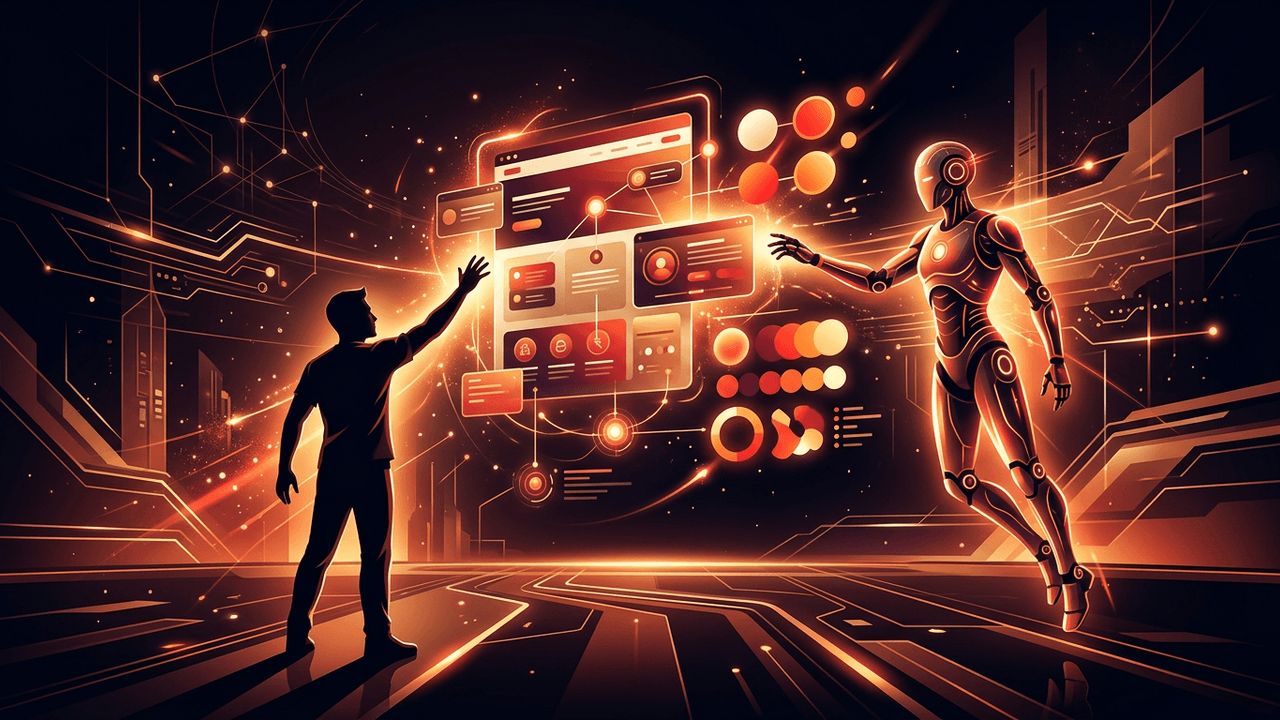
Artificial intelligence has transformed creative industries at remarkable speed. Tools can now generate website layouts from a text prompt, produce custom illustrations, suggest color palettes, and write placeholder copy in seconds. Naturally, this has sparked an important question for business owners and creative professionals alike: will AI replace web designers? The short answer is that AI is changing web design dramatically, but it is far more likely to reshape the designer's role than eliminate it. In this article, we examine what AI does well, where it falls short, and how the future of web design is likely to unfold.
How AAMAX.CO Combines AI Efficiency With Human Design Expertise
The most effective websites today blend smart technology with strategic human thinking. AAMAX.CO is a full-service digital marketing company offering web development, digital marketing, and SEO services worldwide. Their team uses modern tools, including AI-assisted workflows, to speed up research, prototyping, and production, while experienced designers guide brand strategy, user experience, and creative direction. This balanced approach allows them to deliver high-quality, distinctive websites efficiently, giving their clients the benefits of innovation without sacrificing originality or quality.
What AI Can Already Do in Web Design
AI has become genuinely useful across many design tasks. Website builders with AI features can generate entire page layouts based on a short description of a business. Image generators create unique visuals and backgrounds. AI tools can suggest typography pairings, recommend color schemes, resize assets automatically, and convert design mockups into working code. Some platforms analyze user behavior and propose layout adjustments to improve engagement. These capabilities significantly reduce the time needed for repetitive or routine tasks.
Where AI Falls Short
Despite its impressive output, AI has clear limitations. It generates designs based on patterns found in existing data, which often leads to generic, similar-looking results. AI does not truly understand a brand's history, values, audience nuances, or competitive positioning. It cannot sit in a meeting with stakeholders, interpret vague goals, or negotiate conflicting priorities. AI also struggles with complex user journeys, accessibility subtleties, and the emotional storytelling that makes a brand memorable. Without human judgment, AI-generated websites can look polished but fail to connect or convert.
Design Is About Strategy, Not Just Visuals
Professional web design is fundamentally a problem-solving discipline. Designers research audiences, map customer journeys, prioritize content, and align every visual decision with business objectives. They ask why a page exists, what users need from it, and what action the business wants them to take. This strategic thinking cannot be fully automated because it depends on context, empathy, and critical reasoning. Strategic website design remains a human-led process, even when AI tools assist with execution.
The Evolving Role of Web Designers
Rather than disappearing, the web designer's role is shifting. Designers are increasingly becoming creative directors who guide AI tools, curate outputs, and refine results. They spend less time on repetitive production work and more time on research, strategy, user testing, and crafting unique brand experiences. Skills such as prompt writing, design systems thinking, UX research, and conversion optimization are becoming more valuable. Designers who embrace AI as a collaborator are likely to become faster and more capable than ever.
Which Design Jobs Are Most at Risk?
AI will likely reduce demand for very basic, template-driven work, such as simple landing pages or minor graphic adjustments that require little strategic input. Small businesses with straightforward needs may choose AI builders for quick, low-cost sites. However, demand for custom, brand-driven, and conversion-focused websites remains strong. Businesses that compete in crowded markets need differentiation, and that requires human creativity and insight.
Benefits of AI for Designers and Clients
When used thoughtfully, AI benefits everyone involved. Designers can explore more concepts in less time, test variations quickly, and automate tedious tasks like asset resizing. Clients benefit from faster turnaround, lower production costs, and data-informed design decisions. AI can also support accessibility checks, performance analysis, and content suggestions. The key is using AI as an accelerator, not a replacement for expertise.
Human Creativity Remains a Competitive Advantage
In a world where anyone can generate a decent-looking website in minutes, standing out becomes harder and more important. Original ideas, emotional resonance, and authentic brand storytelling are what make websites memorable. Human designers bring cultural awareness, intuition, and the ability to break conventions intentionally. These qualities help businesses create experiences that feel unique rather than algorithmically average.
How Businesses Should Approach AI in Web Design
Businesses should view AI as a powerful tool within a broader design process. Use it to speed up research, generate early concepts, and handle routine tasks, but rely on experienced professionals to define strategy, ensure quality, and protect brand integrity. Partnering with a team that understands both technology and design principles provides the best of both worlds.
Conclusion
Will AI replace web designers? Not entirely. AI is automating parts of the design process and lowering the barrier to basic websites, but it cannot replace the strategic thinking, empathy, and creativity that professional designers provide. The future belongs to designers who leverage AI to work smarter and businesses that combine technological efficiency with human insight. Together, they will create websites that are faster to build and more effective than ever.