
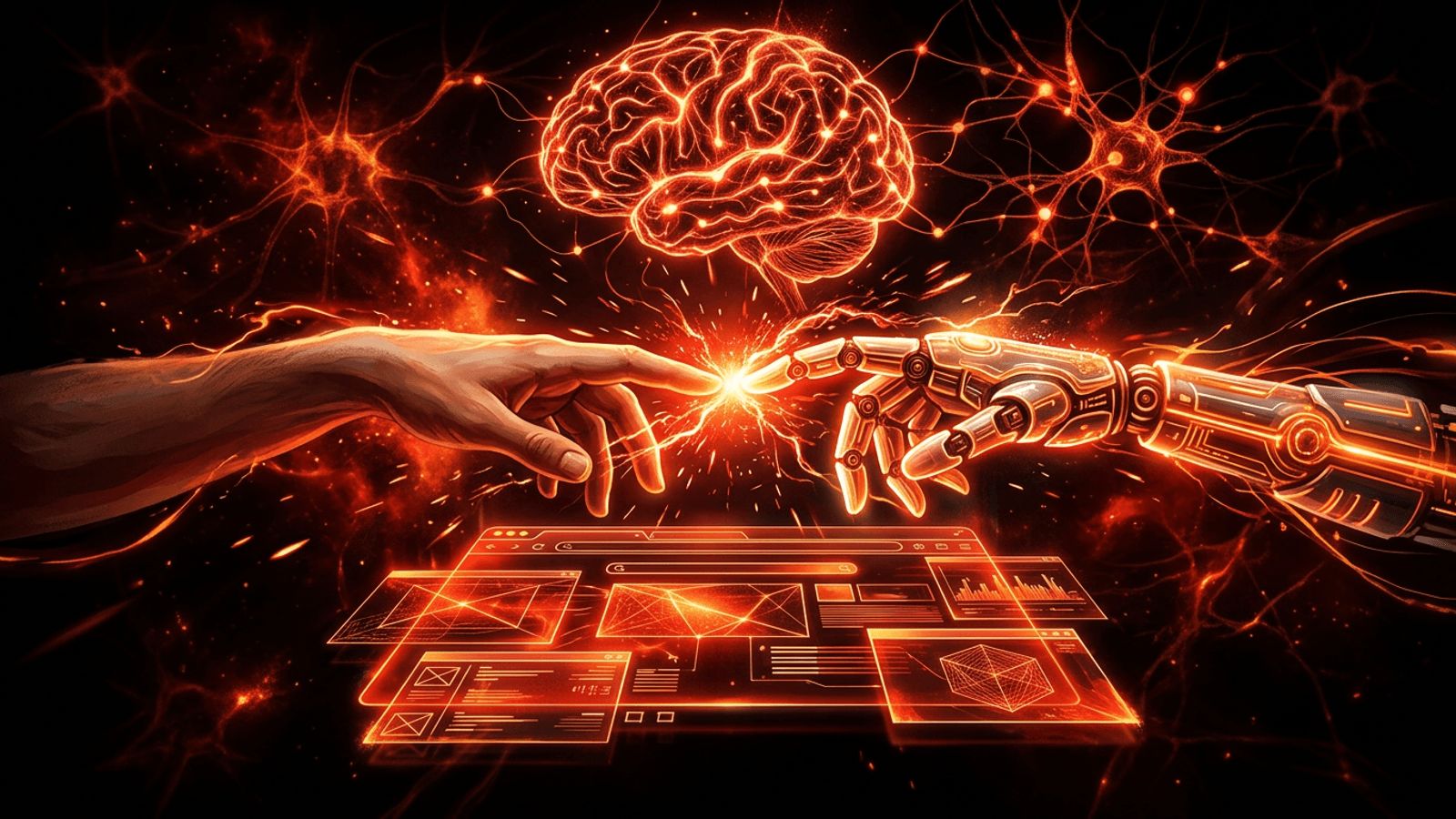
Artificial intelligence has made remarkable progress in recent years. AI coding assistants can generate components, write functions, explain errors, and even scaffold entire websites from a simple prompt. Naturally, this has sparked anxiety among developers and curiosity among business owners. Can web developers be replaced by AI? The realistic answer is no, not entirely, and not anytime soon. AI is transforming how web developers work, automating repetitive tasks and accelerating delivery, but it still depends on human expertise for judgment, architecture, quality, and accountability. In this article, we will explore what AI can do today, where it falls short, how the developer role is evolving, and how developers can future-proof their careers.
AAMAX.CO: Combining Human Expertise With Modern Tools
The most effective development teams use AI as a productivity multiplier while relying on experienced professionals for strategy and quality. AAMAX.CO is a full-service digital marketing company offering web development, digital marketing, and SEO services worldwide. Their developers leverage modern tools to work efficiently while applying human insight to design decisions, security, performance, and business goals. Organizations that want dependable website development benefit from this balance of innovation and expertise, receiving solutions that are both fast to deliver and built to last.
What AI Can Do for Web Development Today
AI coding assistants excel at generating boilerplate code, such as forms, layouts, API handlers, and configuration files. They can suggest completions as developers type, convert designs into starter code, write unit tests, translate code between languages, and explain unfamiliar codebases. AI website builders can generate simple landing pages and small business sites quickly from text descriptions.
These capabilities save time, particularly on repetitive tasks. Developers report faster prototyping, quicker debugging, and less time searching documentation. For simple brochure sites, AI tools can lower the cost of getting online.
Where AI Falls Short
Despite impressive capabilities, AI has significant limitations. It does not truly understand business context. A developer must translate vague client goals into technical requirements, ask clarifying questions, and make trade-offs between cost, performance, and features. AI cannot sit in a stakeholder meeting, read between the lines, or negotiate priorities.
AI-generated code can be incorrect, insecure, or inefficient. It may introduce subtle bugs, outdated patterns, accessibility issues, or security vulnerabilities such as improper input validation. Without an experienced developer reviewing and testing the output, these problems can reach production and cause real damage.
Complex systems also remain challenging for AI. Large applications with many integrations, custom business logic, legacy code, and strict compliance requirements demand architectural thinking and long-term maintainability planning that AI cannot reliably provide on its own.
Finally, accountability matters. When a website goes down, data is breached, or a payment system fails, businesses need a responsible human who understands the system and can fix it.
How the Web Developer Role Is Evolving
Rather than eliminating developers, AI is shifting their focus. Routine coding is becoming faster, so developers spend more time on architecture, code review, testing, integration, performance, security, and user experience. Developers increasingly act as orchestrators, guiding AI tools, validating their output, and assembling components into cohesive systems.
This shift resembles past technological changes. Frameworks, libraries, and content management systems automated many tasks that once required manual coding, yet demand for developers grew because businesses wanted more sophisticated digital experiences. AI is likely to follow a similar pattern, expanding what is possible and raising expectations.
Which Tasks Are Most at Risk?
Simple, repetitive, and well-defined tasks are most susceptible to automation. These include basic static websites, simple template customization, converting straightforward designs to HTML and CSS, and writing standard boilerplate. Developers whose work is limited to these tasks may feel the most pressure as clients turn to AI tools for quick results.
Tasks requiring creativity, problem solving, deep technical knowledge, and collaboration remain firmly human-led. Custom web applications, complex integrations, performance optimization, accessibility compliance, and strategic consulting continue to require skilled professionals.
How Developers Can Future-Proof Their Careers
Embrace AI tools rather than resisting them. Developers who learn to use AI effectively can deliver more value in less time, making them more competitive. Understanding how to write good prompts, review generated code critically, and integrate AI into workflows is becoming a core skill.
Deepen fundamental knowledge. Strong understanding of JavaScript, browser behavior, networking, databases, security, and system design helps developers catch AI mistakes and solve problems AI cannot. Specializing in high-value areas, such as performance engineering, accessibility, security, or complex application architecture, also increases resilience.
Develop soft skills. Communication, project management, and business understanding differentiate developers who can lead projects from those who only write code. Developers who understand how their work affects revenue, user satisfaction, and brand reputation become trusted advisors rather than replaceable resources.
Finally, learn to build AI-powered features. Businesses increasingly want chatbots, recommendation engines, smart search, and automation inside their websites and apps. Developers who can integrate AI into products are in high demand.
What This Means for Businesses
For businesses, AI offers an opportunity to get more value from development budgets. However, relying solely on AI-generated websites can lead to generic designs, poor SEO, security risks, and maintenance headaches. Partnering with experienced developers who use AI responsibly provides the best results: faster delivery without sacrificing quality, security, or strategy.
Conclusion
Web developers are not being replaced by AI, but their roles are evolving. AI is a powerful assistant that accelerates routine tasks, yet it lacks the judgment, context, accountability, and creativity that professional developers provide. Developers who embrace AI, strengthen their fundamentals, and focus on high-value skills will remain essential. In the future of web development, the winners will be the humans who know how to work alongside intelligent tools.